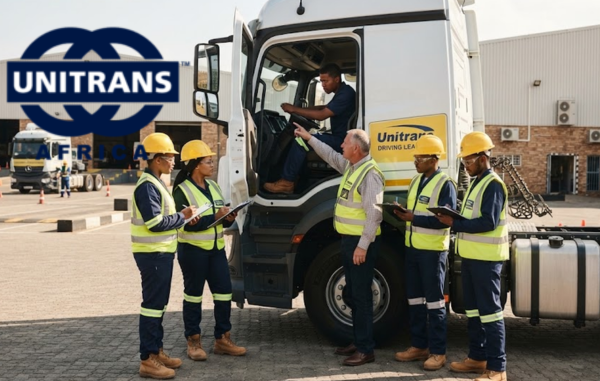
Unitrans has opened a Truck Driver Learnership Opportunity for 2026, giving qualifying unemployed South Africans an opportunity to enter the professional road freight and logistics industry.
The programme leads to an Occupational Certificate: Truck Driver at NQF Level 3 and combines classroom-based learning with practical workplace training. Successful learners will gain experience operating heavy vehicles while developing knowledge of road safety, customer service, technology and modern fleet operations.
The learnership is available across KwaZulu-Natal, Cape Town and Gauteng, with applications closing on 28 August 2026.
Importantly, applicants must already have a valid Code EC driver’s licence and PrDP, meaning this opportunity is aimed at candidates who have already taken significant steps towards becoming professional truck drivers.
Unitrans Truck Driver Learnership 2026 at a Glance
| Job Detail | Information |
|---|---|
| Company | Unitrans |
| Position | Truck Driver Learnership |
| Reference Number | UNI260817-8 |
| Programme | Occupational Certificate: Truck Driver NQF Level 3 |
| Contract | HR Training Academy |
| Job Type | Temporary – Learnership |
| Programme Duration | Approximately 12–18 months |
| Minimum Education | Grade 12 / National Certificate |
| Locations | KwaZulu-Natal, Cape Town and Gauteng |
| Country | South Africa |
| Closing Date | 28 August 2026 |
What Is the Unitrans Truck Driver Learnership?
The Unitrans Truck Driver Learnership is designed to develop young people for careers in the professional transport and logistics industry.
The programme combines theoretical education, practical workplace experience and supervised driving. Learners will therefore have the opportunity to develop both technical knowledge and practical skills.
The programme is particularly relevant to South Africa’s growing logistics sector. Road freight plays a critical role in moving goods between manufacturers, warehouses, distribution centres, retailers and customers.
As a result, professional truck drivers form an important part of the country’s supply chain and logistics management system.
Unitrans is also highlighting the changing nature of professional driving. Modern trucks increasingly use computerised systems, telematics and other technology to improve safety, fuel efficiency and fleet management.
This means today’s professional driver needs more than basic driving ability. Technology awareness, responsible decision-making and customer service are becoming increasingly important.
Who Can Apply for the Unitrans Truck Driver Learnership?
The opportunity is aimed at qualifying unemployed South African youth who meet the stated requirements.
Applicants must have:
- South African citizenship.
- A valid Code EC driver’s licence.
- A valid Professional Driving Permit (PrDP) with the required categories.
- A certified copy of a Matric certificate.
- Medical fitness to perform the duties associated with professional truck driving.
- Willingness to work shifts.
- Willingness to work weekends and public holidays.
A degree or diploma in Logistics, Supply Chain Management, Transport Economics or a related field will be advantageous.
However, applicants should pay particular attention to the driving licence requirement. This is not a beginner driving opportunity for someone who has only recently obtained a standard driver’s licence.
Why a Code EC Licence and PrDP Matter
A major requirement for this learnership is a Code EC driver’s licence together with a PrDP.
A Code EC licence is associated with driving heavy motor vehicles and articulated combinations. The PrDP is also an important requirement for professional driving activities in South Africa.
Therefore, candidates should ensure that their licence and permit are valid before submitting an application.
The advert specifically mentions PrDP categories D, G and P.
Applicants should check their documents carefully and ensure that the information supplied on the application matches their actual qualifications and permits.
What Will Learners Learn?
The programme combines classroom learning with practical workplace exposure.
Learners can expect to develop knowledge and skills in areas such as:
- Professional truck driving.
- Road safety.
- Vehicle operation.
- Safe and efficient driving.
- Energy-efficient driving practices.
- Customer service.
- Problem-solving.
- Workplace discipline.
- Transport operations.
- Modern fleet technology.
- Telematics and onboard vehicle systems.
- Legal requirements relating to road transport.
- Professional conduct.
This combination is valuable because modern logistics companies increasingly rely on technology to monitor vehicles, routes, fuel consumption, driver behaviour and delivery performance.
Practical Driving Experience
One of the most important parts of the programme is the practical component.
Learners must complete a minimum of 100 practical driving hours in the workplace before their final assessment.
This gives participants an opportunity to move beyond theoretical learning and gain genuine exposure to professional driving conditions.
The practical training can help learners understand how heavy vehicles operate in real working environments while being supervised and trained according to workplace requirements.
Safety remains a major priority.
Professional truck drivers are responsible not only for their own safety but also for the safety of other road users, company property, vehicles, cargo and customers.
Classroom Training and Assessment
Learners will also attend compulsory face-to-face classroom training.
The classroom component is designed to provide the theoretical knowledge required for the qualification. Learners must be found competent in the relevant training requirements.
The programme culminates in a final assessment as well as the compulsory External Integrated Summative Assessment (EISA).
Successful completion of the required assessments is therefore an important part of obtaining the Occupational Certificate.
Candidates should be prepared to take both the theoretical and practical elements seriously.
What Does a Professional Truck Driver Do?
A truck driver’s responsibilities extend beyond simply driving from one location to another.
In the logistics industry, drivers can form part of a much larger supply chain operation.
Depending on the employer and type of transport operation, responsibilities can include:
- Conducting vehicle inspections.
- Operating heavy vehicles safely.
- Transporting goods between designated locations.
- Following planned routes.
- Complying with road traffic regulations.
- Protecting company vehicles and cargo.
- Completing required documentation.
- Communicating with customers and operational teams.
- Reporting vehicle faults.
- Following company safety procedures.
- Monitoring delivery requirements.
- Using onboard technology and telematics.
- Maintaining professional conduct.
- Managing unexpected situations responsibly.
For this reason, reliability and sound judgement are important attributes for anyone pursuing a career in professional driving.
Important Skills for Future Truck Drivers
Unitrans is looking for more than applicants who can operate a heavy vehicle.
The company highlights several personal attributes that can contribute to success in the programme.
Safety-First Mindset
Safety should always come before speed or convenience.
Truck drivers operate large and heavy vehicles, often over long distances. Good judgement and responsible driving are therefore essential.
Customer Service
Professional drivers can interact with customers, suppliers, warehouse personnel and other employees.
Good communication can help prevent misunderstandings and improve the delivery experience.
Problem-Solving
Drivers may encounter traffic congestion, mechanical problems, route changes, weather conditions or unexpected delivery issues.
The ability to remain calm and make appropriate decisions is therefore valuable.
Technology Awareness
The transport industry is becoming increasingly digital.
Drivers may interact with:
- Telematics systems.
- GPS and route-management technology.
- Onboard vehicle systems.
- Electronic monitoring systems.
- Fleet-management technology.
Candidates who are comfortable learning new technology can therefore have an advantage as the industry modernises.
Career Opportunities After the Learnership
Completing a recognised truck-driving qualification can provide a foundation for a longer-term career in transport, logistics and supply chain management.
Professional drivers can potentially build experience in areas such as:
- Long-distance freight.
- Distribution.
- Warehousing and logistics.
- Fleet operations.
- Retail distribution.
- Mining logistics.
- Manufacturing logistics.
- Fuel transportation.
- Supply chain operations.
With sufficient experience, professional drivers may also explore career progression into roles involving fleet supervision, transport coordination and logistics operations, depending on their qualifications and employer requirements.
For candidates interested in broader logistics careers, additional studies in Supply Chain Management, Logistics Management, Transport Management or Business Administration can complement practical driving experience.
Estimated Compensation and Benefits
The information provided for this learnership does not specify a monthly stipend or salary amount.
Therefore, applicants should not assume a particular remuneration figure unless it is confirmed by Unitrans in the official recruitment documentation.
| Benefit / Employment Feature | Estimated / Advertised Information |
|---|---|
| Salary / Stipend | Not specified in the supplied advert |
| Medical Aid | Not specified |
| Pension Fund | Not specified |
| Life Insurance | Not specified |
| Disability Cover | Not specified |
| Employee Wellness | Not specified |
| Bonuses | Not specified |
| Paid Leave | Subject to learnership terms and applicable conditions |
| Training Opportunities | Yes – structured theoretical and practical training |
| Qualification | Occupational Certificate: Truck Driver NQF Level 3 |
The safest approach is to confirm remuneration and any employment benefits directly through the official Unitrans recruitment process.
Where Is the Unitrans Learnership Available?
The vacancy lists opportunities in:
- KwaZulu-Natal
- Cape Town
- Gauteng
Because the advert identifies multiple locations, applicants should check the specific vacancy information and available placement when completing their application.
Candidates should also consider whether they can reasonably travel to or relocate for the required training and workplace component.
Documents Required When Applying
Applicants must submit supporting documentation with their application.
The advert requires certified copies of relevant documents, and these should not be older than three months.
Prepare the following:
- Certified South African ID.
- Certified Code EC driver’s licence.
- Certified PrDP.
- Certified Matric certificate.
- Copies of other relevant qualifications, if applicable.
- Updated CV.
Applicants should make sure that all documents are clear and readable.
A document that is incomplete, blurry or incorrectly uploaded could create problems during the recruitment process.
How to Apply for the Unitrans Truck Driver Learnership
Interested candidates should apply through the Unitrans recruitment portal.
When completing the application, carefully check that all personal information, qualifications and licence details are correct.
Applicants should also:
- Prepare an updated CV.
- Obtain certified copies of the required documents.
- Confirm that the Code EC licence is valid.
- Confirm that the PrDP is valid and meets the advertised requirements.
- Check that the Matric certificate is available.
- Complete the online application accurately.
- Upload the required supporting documents.
- Review the application before submitting it.
- Submit the application before the closing date.
The vacancy reference number is UNI260817-8.
Who Should Consider This Opportunity?
The Unitrans Truck Driver Learnership could be particularly suitable for unemployed South Africans who already hold the required heavy-vehicle driving credentials and want to turn those credentials into a professional logistics career.
It may also appeal to candidates who are interested in the broader transport and supply chain industry.
The opportunity is especially relevant if you:
- Have Grade 12.
- Hold a valid Code EC licence.
- Have the required PrDP.
- Are unemployed.
- Are medically fit.
- Are comfortable working shifts.
- Can work weekends and public holidays.
- Have a strong commitment to road safety.
- Want to build a career in logistics.
- Are willing to complete classroom and practical training.
A qualification in logistics, supply chain management or transport economics can strengthen your profile, although the advert lists such qualifications as advantageous rather than the primary requirement.
Why the Transport and Logistics Industry Is Worth Considering
South Africa depends heavily on road transportation to move goods throughout the country.
Manufacturers need raw materials delivered to production facilities. Retailers need products delivered to stores. Warehouses need stock moved between distribution points. Businesses also need reliable transportation to connect suppliers with customers.
Consequently, professional drivers are an important component of the country’s supply chain infrastructure.
The industry also creates opportunities beyond driving. With additional experience and education, professionals can move towards areas such as fleet management, transport planning, warehouse management, procurement and supply chain coordination.
This makes a truck-driving learnership potentially more than just a first job. It can be the starting point for a broader career in logistics.
Final Thoughts
The Unitrans Truck Driver Learnership 2026 offers unemployed South Africans an opportunity to develop professional driving skills while working towards an Occupational Certificate: Truck Driver NQF Level 3.
The programme combines classroom training, workplace exposure and at least 100 practical driving hours, followed by the required assessments.
However, applicants must meet the important entry requirements, particularly the Code EC driver’s licence and PrDPrequirements.
With applications closing on 28 August 2026, eligible candidates should prepare their documents and submit their applications as early as possible.
If you meet the requirements, do not wait until the final day. Apply for the Unitrans Truck Driver Learnership before 28 August 2026 and take the first step towards a professional career in transport, logistics and supply chain management. Also explore other learnerships, internships, graduate programmes and entry-level logistics opportunities that can help you build long-term career experience.